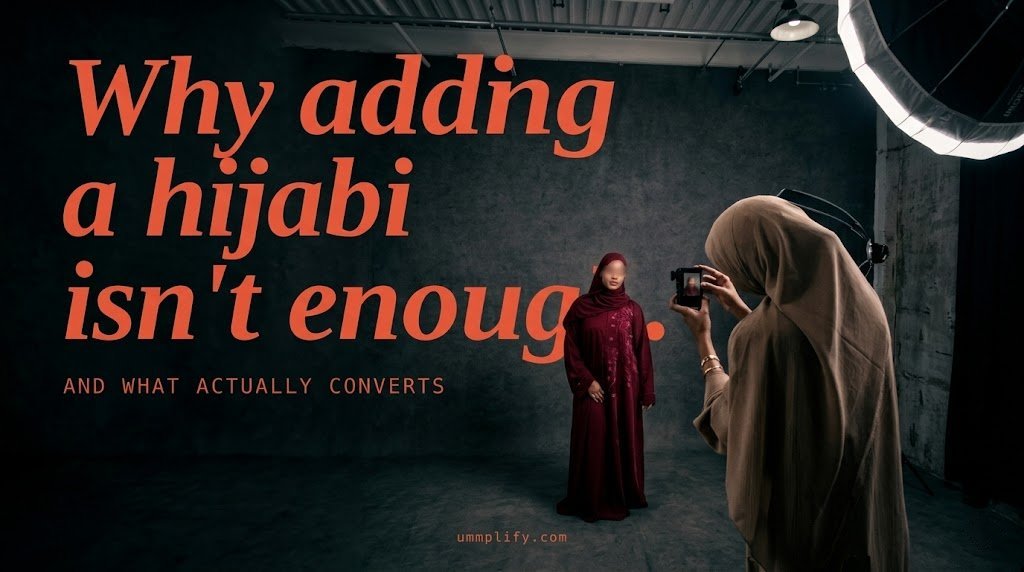
Nada Merrachi started mailing hijabs to Muslim creators. No contract, no brief, nothing asked in return.
The creators posted. Then other creators started wanting one too. Getting a Merrachi hijab became something you showed off, proof the brand had chosen you.
She opened a pop-up in Paris during Ramadan. Women queued down the Rue de Turenne for hours. She didn't buy that queue. She built it over three years of content that looked nothing like an ad.
Most founders who try to copy this miss the point in the first five minutes.
They find a Muslim creator. They send a product. They write a brief with "authentic content" somewhere in the second paragraph. The content goes out. Nothing converts. They conclude the market is too specific.
What actually happened is simpler and more fixable.
The gap that nobody talks about
Only 14% of Muslim consumers say they see their culture represented often or very often in advertising. At the same time, 75% say they'd be more likely to buy from a brand that represents them positively and authentically. That gap isn't explained by lack of trying. Brands have been putting Muslim faces in campaigns for years.
The problem is that a mainstream campaign with a Muslim face in it is still a mainstream campaign. Same product setup. Same script. Same lighting. Same language. The only variable that changed is who's holding the product. The audience clocks it within three seconds.
"We often felt that we were not represented authentically within how brands decided to market to a Muslim audience." Muslim Sisterhood, UK art collective. They've worked with Converse and Daily Paper.
That quote is not from an angry comment section. It's from people who actually partnered with brands to try to fix this.
What Merrachi did differently
It starts with the founder's own story. Nada is a Moroccan-Dutch woman who started wearing hijab and spent months unable to find clothes that matched both her taste and her values. That frustration was the product brief.
The creators she worked with weren't given a messaging document. They were given a product that already existed inside their world, and asked to show it there.
Their apartment. Their errands. Their morning routine.
The viewer wasn't watching a campaign. She was watching someone she already followed do something she already did, with something she hadn't seen before.
63% of British Muslims say brand Ramadan activations feel outdated and disconnected from their real lives. That's not a niche grievance. That's most of the market telling brands the same thing.
What that means for your brief
Send the product. Mention two things that would be out of place culturally. Then stop writing.
The creator knows what her audience responds to in a way no brief document will capture. A well-cast creator with three lines of direction will consistently outperform a polished campaign with a detailed messaging guide.
Before you post anything, one check. Show the content to someone outside your team and ask: does this look like it was made by someone inside this community, or by someone performing for it?
If they pause, reshoot.
The brands that struggle with this audience are usually not under-spending. They're over-directing. The creative would have worked if they'd stepped back earlier.
If you're still weighing whether this market is worth the effort in the first place, the numbers make the case better than any creative brief can.