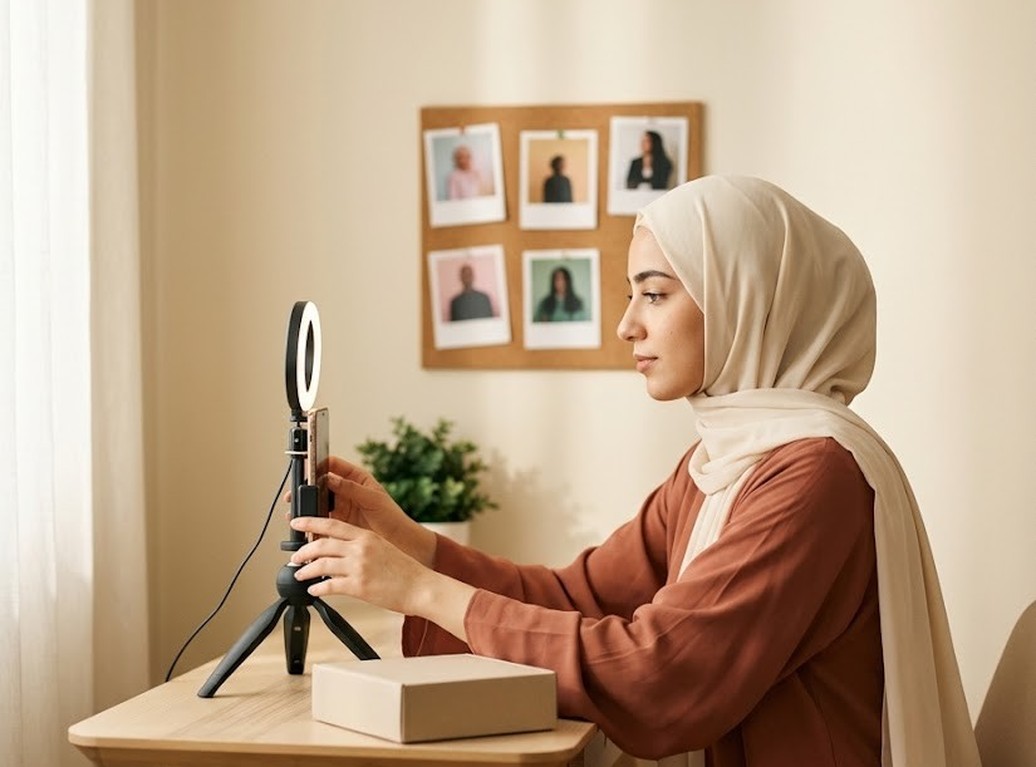
In-N-Out Burger opened its first location in 1948.
Seventy-seven years later, it operates in eight states.
Eight. Not fifty. The company is still privately held, still refuses to franchise, and still won't open in a new market until it can guarantee the same quality bar as its first restaurant in Baldwin Park.
McDonald's took a different path and now has restaurants on every continent except Antarctica. Neither company is wrong. They're playing different games, on different timelines, with different tolerance for what happens when quality slips at scale.
Most founders picking between a Sponsored Creator Post and a full creator campaign are really asking the In-N-Out question without realizing it: do I expand now, or do I prove the model first?
The instinct to skip straight to "campaign" is usually wrong
A campaign feels like the serious option. More creators, more reach, paid media behind it, it looks like commitment. A Sponsored Creator Post feels small by comparison, almost like it's not really trying.
That instinct is backwards for most brands testing a new audience for the first time.
One creator, matched badly, teaches you nothing except that one creator was wrong for you. Five creators, matched on the same bad assumption, just multiply the cost of finding that out, the same mismatch problem we broke down in why adding a hijabi to your ad isn't enough.
Why the Sponsored Creator Post usually comes first
Three reasons, in order of how often they actually decide it.
You don't know your angle yet. Nano and micro-influencer content consistently earns higher engagement than content from bigger accounts, largely because the audience trusts a creator who looks like them over one who looks like a media brand (EMARKETER, citing HypeAuditor, 2026). But which angle, which creator style, which hook works for your specific product is something you find out by testing, not by guessing across five creators at once.
Influencer pricing is per creator, not per result. Nearly half of influencers charge somewhere between $250 and $1,000 for a single post (Sprout Social, 2025). Committing that budget five times over, before you know what converts, is a bet on your first guess being right.
Sponsored creator content already beats your own organic content on its own. 92% of marketers say content made by a paid creator outperforms what the brand posts on its own account (Sprout Social, 2025). That gap alone is usually worth testing before anything else: one creator, one post, minimal spend.
The Scale Trigger
Three signals that a Sponsored Creator Post has done its job and a managed campaign is the next honest step. Not vibes, actual signals.
1. The creator you tested actually performed. Real engagement, real comments from the right audience, not just views. If the one post underperformed, the answer isn't more creators, it's a different creator or a different product angle.
2. You have budget for paid media, not just content. A campaign's real advantage over a single post isn't more creators, it's pairing creator content with paid distribution behind it. Without ad spend, five organic posts from five creators usually underperform one well-placed, well-boosted post.
3. You're ready to manage more than one relationship. Briefing, reviewing, and coordinating five creators at once is a different job than approving one script. If nobody on your team has bandwidth for that, a campaign becomes a bottleneck instead of a growth lever.
If none of the three apply yet, that's not a bad sign. That's In-N-Out at eight states instead of fifty.
What this isn't
This isn't an argument that campaigns are risky or that brands should stay small forever. 69% of consumers say they trust an influencer's recommendation over what a brand says about itself (Influencer Marketing Hub, cited via Shopify, 2024), and that trust compounds fastest with more creators saying the same thing in different voices, the same compounding effect behind the $186 billion opportunity mainstream brands are still sitting on. A campaign, run at the right time, is the fastest way to build that.
The mistake isn't running a campaign. It's running one before a Sponsored Creator Post has told you anything.
Next, the five questions worth asking before signing any multi-creator campaign, not just ours.